

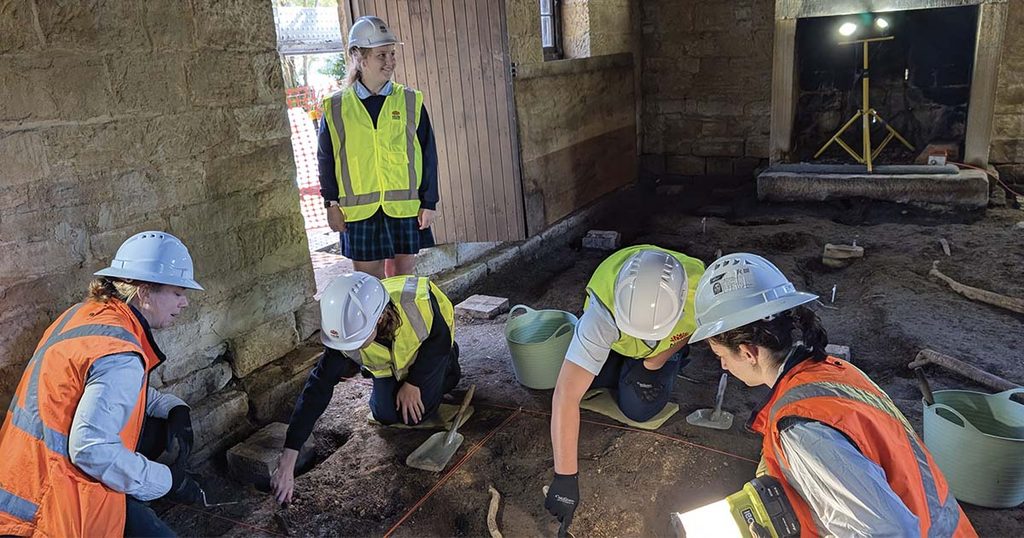
Waddell Cottage had been holding onto its secrets for well over a century. Restoration workers found them first — fragments of historic glass and other materials lying beneath the original floorboards, undisturbed since the late 1800s. Enough to stop the building work and call in archaeologists.
Fiona and Emily took over from there. What began as a restoration project became a supervised excavation, and before long, a group of Year 8 and Year 9 students found themselves crouched inside a heritage building, learning to read the ground beneath their feet.
Archaeology has its own language. Stratigraphy — the study of soil layers as a record of time — is one of the first things students were taught before they were handed trowels. The idea that you can stand on centuries of accumulated history, and that the careful removal of each layer reveals a sequence of human events, is not an easy concept to absorb from a page. Inside Waddell Cottage, it became something students could actually see and touch.
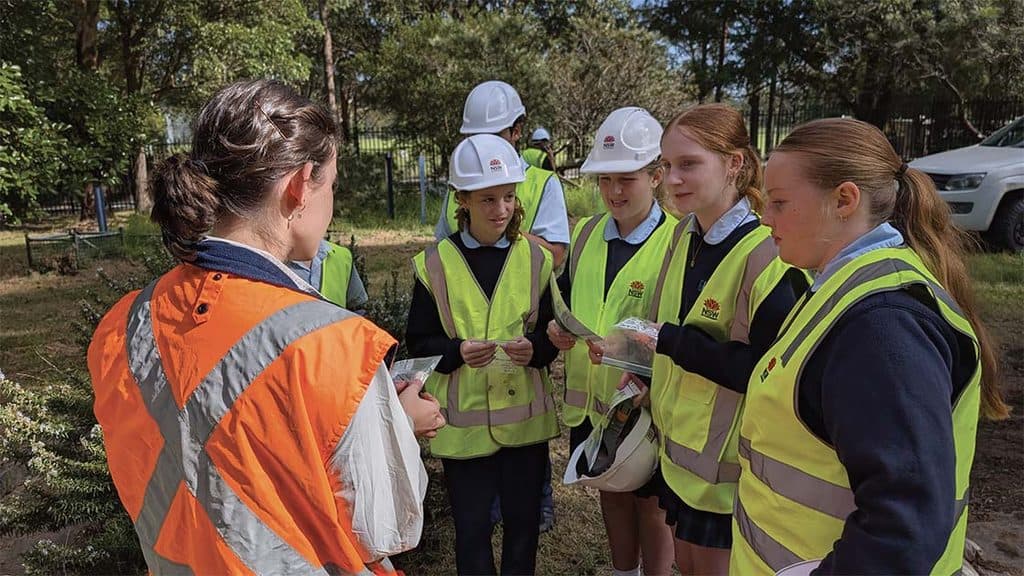
The artefacts themselves did the rest. Objects recovered from beneath a colonial-era building carry a particular weight — they are not museum pieces yet, not framed or labelled or explained. They are just things that belonged to someone, a very long time ago, in this specific place.
Once the restoration is complete, Waddell Cottage will open its doors during public events. The students who spent time in the dirt will be among those welcoming visitors and sharing what was found. Some stories need a long time underground before they are ready to be told.